
How to Search Civil Dockets
Match the tool to the court. Use MCR for a Magistrate civil matter and WVPASS for a Circuit civil matter. MCR lets you search by Case ID, last or company name, first and middle names, a filing-date range, case type, party type, or Hampshire court location. You need at least one of three things. That means a Case ID, a citation number, or a last or company name. WVPASS offers public Circuit case and name routes, and registration is free.
- Identify the court from the complaint, notice, or case number.
- Search by exact case number when it is known.
- For MCR, select Hampshire, the civil case type, dates, and party role.
- Open the detail and record the filing date, amount, parties, appearance date, disposition, and related cases.
- Call the correct clerk or use the Magistrate public terminal if the result is unclear.
Each clerk keeps a different slice of the Hampshire County court record. Circuit and Family files live with the Circuit Clerk. Lower-court civil files belong to the Magistrate Clerk. A deed or probate record sits with the separate County Clerk, so it is not part of a civil docket at all.
Hampshire's $20,000 Court Line
Money decides the first fork in the road. The official Magistrate Courts overview puts the civil jurisdiction limit at $20,000. A claim at or below that amount generally starts in Magistrate Court. The governing law and its exceptions still apply. Anything larger usually belongs in Circuit Court. Treat the figure as a routing fact, not a final jurisdiction opinion.
Quick route: Search MCR first for a small claim, detinue, or unlawful-detainer matter. Search WVPASS for a larger Circuit claim or a later appeal.
A blank Circuit result proves nothing. The case may sit in Magistrate Court instead, carry a name variation, or simply not have reached the public digital collection yet. Try the other court before concluding that no case was filed.
What a Civil Docket Shows
Think of a civil docket as a chronological register rather than the full evidence file. It records when the complaint was filed and who appears in each role. It shows whether service was recorded. You can see when motions or answers arrived. It also lists which settings were entered. You can also see when the court recorded an order or judgment.
| Case Header | Case ID, court location, style, filing date, type, and trial type. |
|---|---|
| Parties | Plaintiff, defendant, attorney, agency, or other role. |
| Claim | Civil category and claim or amount where recorded. |
| Settings | Appearance Date and other hearing events. |
| Outcome | Disposition, judgment, and related-case links. |
An entry saying an order exists does not guarantee its image is online. When the document text matters, request the exact order from the clerk.
Hampshire Civil Fields in MCR
The official MCR detail inventory uses a shared case header for civil and criminal matters. A Hampshire civil result can expose the civil case type, parties and roles, claim amount, and filing date. You may also see the Appearance Date, related cases, claims or allegations, and disposition information. The portal holds no document images.
- Style
- The case caption, not its outcome.
- Party type
- The role assigned to a person or entity.
- Appearance Date
- A scheduled event, subject to later change.
- Disposition
- The result recorded for a claim or case.
- Related case
- A linked file, such as an appeal or connected matter.
Compare the claim amount and case type against the Magistrate limit. Then ask whether an appeal or removal opened a Circuit file.
Types of Civil Cases on the Docket
Magistrate Court handles small claims, detinue, unlawful detainer, and other limited civil matters. Detinue seeks the return of personal property. Unlawful detainer concerns possession of real property. Circuit Court takes the larger civil claims, agency appeals, Magistrate appeals, guardianships, extraordinary writs, and other general-jurisdiction matters.
| Case Type | Likely Starting Court | Search Route |
|---|---|---|
| Small claim up to the limit | Magistrate Court | MCR |
| Detinue or unlawful detainer | Magistrate Court | MCR |
| Larger general civil claim | Circuit Court | WVPASS |
| Magistrate appeal or removal | Circuit Court after lower file | MCR, then WVPASS |
| Domestic relations | Family Court | Circuit Clerk access route |
Guardianship and family materials often carry special privacy rules. The category name alone does not make every paper public.
Hampshire Appeals Create Two Trails
Appeals split one dispute into two court records. A Magistrate judgment can be appealed to Circuit Court. A civil action can also be removed or transferred under applicable rules. The result may be a lower-court MCR record plus a newer Circuit record in WVPASS. Search both whenever the MCR detail shows a related case. Search them too if a notice names Circuit Court. Write down the original Case ID. Add the disposition date, appeal information, and any new Circuit number. Each clerk keeps its own court record for its stage of the case. The Magistrate Clerk validates the lower file, while the Circuit Clerk validates the appeal.
Settings and Hearings on Civil Dockets
An Appearance Date can mark a scheduled event, nothing more. It is not proof the matter will be tried or decided that day. A motion, an order, a continuance, a service issue, or a settlement can all change the next step. Note too that filing-date filters in MCR do not search hearing dates. Read every later docket entry before drawing conclusions. Then confirm the current date, time, judge, courtroom, and setting type with the clerk, because Hampshire posts no standalone public trial calendar. The public terminal, telephone, counter, served notice, and attorney remain the dependable fallback channels. One more wrinkle: a satisfied judgment stays on the chronology, since later compliance does not erase the fact that the judgment was entered. Ask for the current judgment or satisfaction record instead of treating an old docket line as the whole status.
Hampshire Civil Activity in 2025
The 2025 Judiciary Annual Report counts 160 Hampshire Circuit civil matters across its displayed categories. The breakdown includes 37 agency appeals, 82 domestic-violence matters, 4 general civil cases, 3 guardianships, 12 Magistrate appeals, and 22 mental-health matters. The Magistrate civil and special tables add 516 small claims, 3 personal-safety matters, 75 domestic-violence emergency protective orders, and 1 temporary emergency protective order.
These are activity figures, not a live case index. They explain why a Hampshire County docket search must span the right court level. They also show how broad "civil case" language can hide very different access rules.
Public Access to Civil Dockets
West Virginia law leans toward openness. Code §51-4-2 lets anyone inspect court records and papers. Anyone can also buy clerk-furnished copies, unless a special provision says otherwise. Trial Court Rule 10.04 fills in the mechanics. It covers judicial-record requests, inspection during usual hours, electronic format where it exists, and reproduction costs that stay reasonable. Rule 15A handles sealing and public electronic filings.
Family Court Rule 6 draws a tighter line. Orders and indices stay public. Pleadings, exhibits, recordings, transcripts, and much other sensitive file material are confidential. Juvenile, adoption, mental-hygiene, protected domestic-violence, sealed, and expunged material may be withheld too. A "no results" screen proves nothing; a confidential proceeding can still exist behind it.
Hampshire Circuit Documents Online
WVPASS went statewide on March 10, 2025. It reaches public Circuit civil and criminal documents dating to 1999. Registration and searching cost nothing. Downloads run 25 cents per page, plus a small card charge. Sealed or juvenile records never appear.
For a Hampshire County civil docket search, start at the official WVPASS interface. It is the public route into Circuit court records.
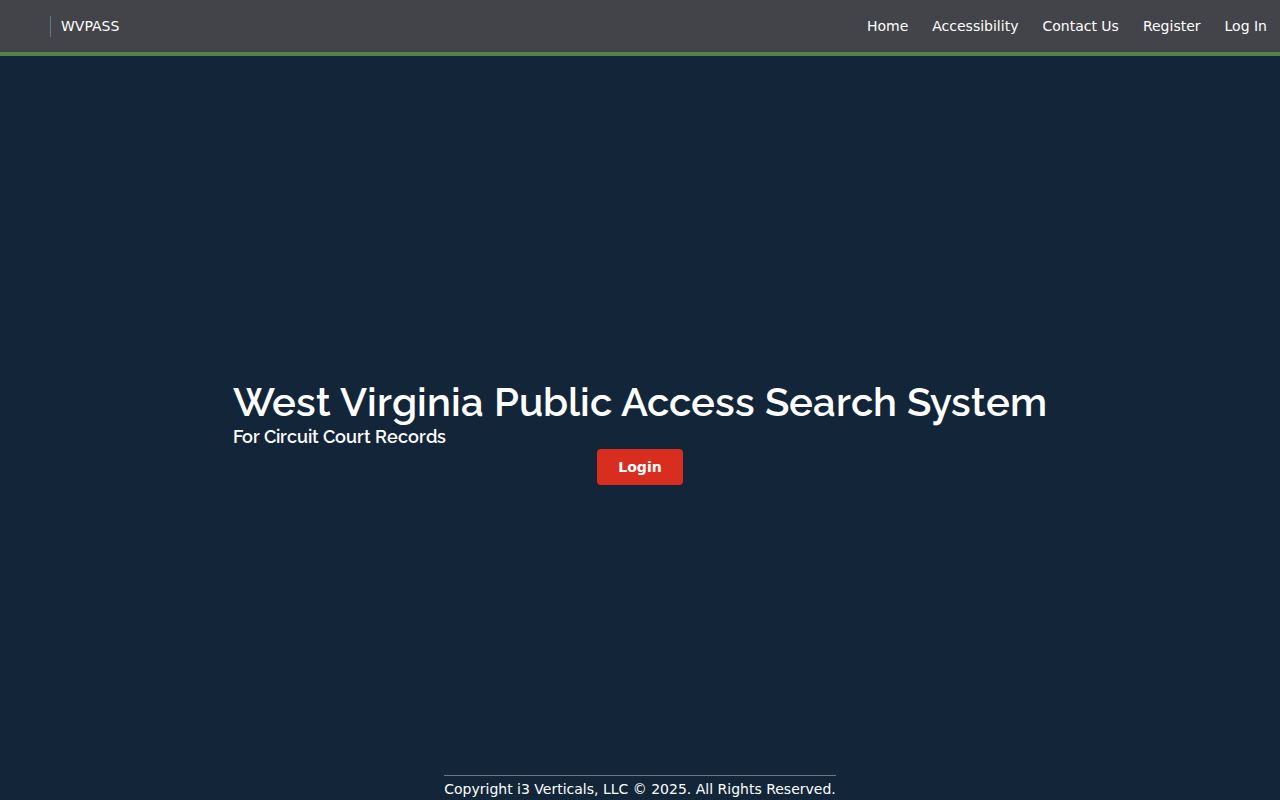
The system is client-rendered. An error or loading message can appear. Don't assume a Hampshire County filing is missing. Call the Circuit Clerk at 304-822-5022 for any public file or page that won't load. You can also visit the Suite 157 counter. The office takes plain and certified copy requests as well.
Hampshire Civil Search Checks
Check before you trust a match. Compare the court and the full case number. Then check the filing date, each party's role, the claim type, and the latest docket event. A company may be indexed under its legal name rather than a trade name. A person's middle name may simply be absent. Search one controlled variation at a time, keeping the Hampshire and case-type filters in place. That discipline makes false matches stand out.
If the docket and a mailed notice disagree, save both and call the clerk. Staff can verify the current register. They can point to an available court record and explain the copy process. They cannot interpret the case or pick a legal response for you.